
Trusted by 155+ Homeowners
Flooded Basement Floors: Concrete Vs Tile Vs Wood
- Over 157 5-Star Reviews
- Free Estimates and Quotes
- 100% Satisfaction Guaranteed
- Child, Family & Pet Safe Steps
- 24-Hour Emergency Service
- Fully Licensed & Insured
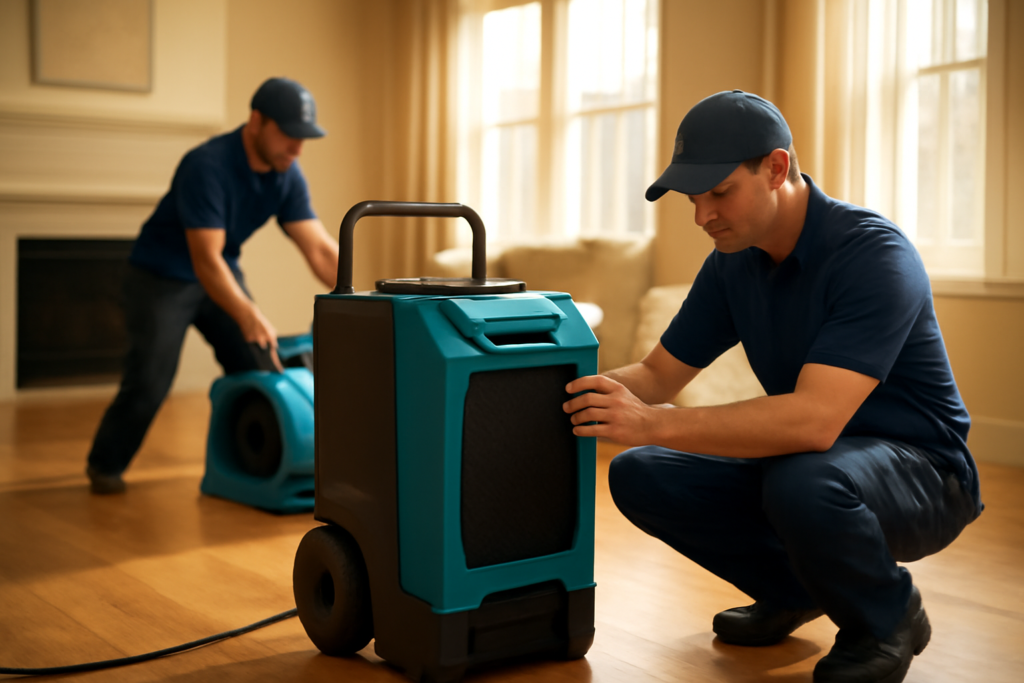
Flooded basement floors present a tough choice between concrete, tile, and wood. Each material reacts differently to water, affecting repair costs and timelines.
Understanding these differences is key to making the right decisions after a flood. Different floor types require distinct drying and restoration methods.
TL;DR:
- Concrete floors are durable but can absorb moisture, leading to efflorescence and mold.
- Tile floors are generally water-resistant, but grout and subflooring are vulnerable.
- Wood floors are highly susceptible to water damage, often requiring replacement.
- Prompt drying and professional assessment are vital for all basement floor types.
- Proper grading and drainage are essential for preventing future basement flooding.
Flooded Basement Floors: Concrete vs Tile vs Wood
When your basement floods, the floor material becomes a major concern. You might be wondering what happens to your concrete, tile, or wood floors. Each has its own challenges when wet.
Concrete Floors: The Durable Option?
Concrete is a popular choice for basements due to its strength. It’s generally considered water-resistant. However, it’s not waterproof. Concrete is porous.
This means it can absorb water over time. Absorbed moisture can lead to issues like efflorescence, which is a white, powdery residue. It can also create a breeding ground for mold and mildew if not dried properly.
The good news is that concrete is often salvageable. Proper drying techniques are crucial. We found that professional drying can often save concrete floors. It prevents deeper moisture penetration.
Dealing with Concrete Water Damage
If your concrete floor is wet, the first step is to remove standing water. Then, drying equipment is needed. This includes fans and dehumidifiers. Proper ventilation is also important.
If efflorescence appears, it can usually be cleaned. However, persistent moisture can weaken the concrete. This can lead to cracks over time. Don’t wait to get help if you suspect structural damage.
Tile Floors: Mostly Waterproof, But Watch Out!
Tile itself is usually waterproof. Ceramic and porcelain tiles are excellent choices for wet areas. They don’t absorb much water. This makes them seem like a safe bet for basements.
However, the grout between the tiles is not. Grout is porous. It can soak up water like a sponge. This can lead to mold growth under the tiles. Water can also seep through the grout to the subfloor.
The subfloor beneath the tile is a major concern. If it’s wood or cement board, water damage can be extensive. This is where the real problems can start.
Tile Restoration Challenges
If water gets under the tiles, it can be hard to remove. The tiles themselves might need to be removed. This allows access to the subfloor for drying.
Sometimes, the grout needs to be re-sealed. If the subfloor is damaged, it will need repair. This adds to the cost and time of restoration. Call a professional right away to assess the extent of the damage.
Wood Floors: The Most Vulnerable
Wood and water are not good friends. Wood floors in a basement are a risky proposition. They absorb moisture very quickly. This causes them to swell and warp.
Even a small amount of water can cause lasting damage. The wood fibers can break down. This leads to buckling, cupping, and structural weakness. Repairing water-damaged wood floors is often not possible.
Replacement is frequently the only option for wood floors. This is a costly outcome. It highlights the importance of preventing water intrusion in the first place.
The Fate of Waterlogged Wood
Once wood is saturated, it’s hard to bring it back. Drying it out can take a very long time. We found that even after drying, warped wood rarely returns to its original state.
Mold can also become a serious issue. The porous nature of wood makes it a prime target for fungal growth. Serious health risks are associated with widespread mold contamination.
| Floor Type | Pros in a Flood | Cons in a Flood | Typical Restoration |
|---|---|---|---|
| Concrete | Durable, generally salvageable | Porous, can absorb moisture, efflorescence, mold potential | Drying, cleaning, sealing |
| Tile | Water-resistant surface | Grout absorbs water, subfloor vulnerability | Drying, grout repair/replacement, subfloor repair |
| Wood | Aesthetically pleasing (when dry) | Highly absorbent, warps easily, prone to mold, often unsalvageable | Often requires replacement |
The Drying Process: A Critical Step
No matter your basement floor type, drying is paramount. The longer water sits, the more damage it causes. Mold can start to grow within 24-48 hours.
Professionals use specialized equipment. This includes industrial-strength dehumidifiers and air movers. They can extract moisture efficiently. This speeds up the drying process significantly.
Act before it gets worse by contacting professionals. They understand the science of drying. They can help prevent long-term damage. This is true for any type of interior water damage.
How Long Will It Take?
The time it takes to dry a basement depends on several factors. These include the amount of water, the floor material, and the extent of saturation. It also depends on the drying methods used.
A minor flood might take a few days to dry. A major flood can take weeks. Research shows that a wet basement can take a long time to fully dry. Understanding drying times is important for managing expectations.
Prevention is Better Than Cure
The best way to deal with flooded basement floors is to prevent flooding. Regular maintenance is key. Check your foundation for cracks. Ensure your sump pump is working.
Proper grading and drainage around your home are vital. This directs water away from your foundation. It prevents water from pooling near the basement walls. Consider this one of your essential storm prep steps.
Common Causes of Flooding
Basement flooding can happen for many reasons. Heavy rains can overwhelm drainage systems. Sewer backups are another common culprit. Leaking pipes or foundation cracks can also let water in.
Even appliance failures, like a washing machine hose bursting, can cause significant water damage. Understanding these risks can help you prepare. This is also relevant for preventing garage water damage.
When to Call the Pros
Dealing with a flooded basement is stressful. It’s also a job for trained professionals. They have the equipment and expertise to handle it safely and effectively.
Attempting to dry out a large flood on your own can be dangerous. You might not get all the moisture. This can lead to hidden mold growth. Knowing how pros dry out a flooded home can give you peace of mind.
Do not wait to get help if you have significant water in your basement. The sooner professionals address the problem, the better the outcome.
What to Do Immediately
If you discover a flooded basement, safety first! Turn off electricity to the affected area if possible. Avoid walking in standing water if the power is on.
Remove any valuables that are not damaged. Then, call a restoration company. They can assess the situation and begin the drying process. They can also guide you on the next steps for your specific floor type. This applies even if it’s just a small flooded room.
Making the Right Choice for Your Floor
Choosing between repairing or replacing your basement floor depends on the material and the damage. Concrete and tile often have a better chance of being salvaged. Wood floors are much less forgiving.
Get expert advice today from a qualified restoration specialist. They can provide a realistic assessment. This helps you make informed decisions about your home.
Conclusion
Flooded basement floors, whether concrete, tile, or wood, present unique challenges. Understanding how each material reacts to water is essential for effective restoration. While concrete and tile can often be dried and repaired, wood is typically unsalvageable and requires replacement. Prompt action and professional drying are critical to minimize damage and prevent further issues like mold growth. For reliable and expert assistance with basement water damage, Eden Prairie Restoration Pros is a trusted resource ready to help you restore your home.
What is the biggest risk with concrete basement floors after a flood?
The biggest risk with concrete floors is that they are porous and can absorb moisture. This can lead to efflorescence, mold growth, and potential weakening of the concrete over time if not dried thoroughly.
Can tile grout be saved after a flood?
Tile grout is porous and can absorb water. While it might be possible to dry it out and re-seal it, severe saturation or mold growth may require grout removal and replacement.
Is it ever possible to save a water-damaged wood basement floor?
It is very rare for wood basement floors to be saved after significant water damage. They tend to warp, swell, and can develop mold. Replacement is usually the most practical and safe solution.
How quickly does mold grow in a wet basement?
Mold can begin to grow in as little as 24 to 48 hours in damp conditions. This highlights the urgency of removing water and drying out the area as soon as possible.
What is the first thing I should do if my basement floods?
Your absolute first priority is safety. If there’s any risk of electrical shock, turn off the power to the basement. Then, if it’s safe to do so, remove any items that can be salvaged. After that, call a professional restoration service immediately.

Levi Lemieux is a licensed Damage Restoration Expert with more than 20 years of hands-on experience in disaster recovery and structural mitigation. As a seasoned industry authority, Levi has dedicated two decades to mastering the technical complexities of environmental safety, providing property owners with the reliable expertise and steady leadership required to navigate high-stress property losses with absolute confidence.
𝗖𝗲𝗿𝘁𝗶𝗳𝗶𝗰𝗮𝘁𝗶𝗼𝗻𝘀: Levi holds elite IICRC credentials, including Water Damage Restoration (WRT), Applied Structural Drying (ASD), Mold Remediation (AMRT), Fire and Smoke Restoration (FSRT), and Odor Control (OCT).
𝗙𝗮𝘃𝗼𝗿𝗶𝘁𝗲 𝗣𝗮𝘀𝘁𝗶𝗺𝗲: When off-site, Levi is a passionate mountain biker and an amateur astronomer, hobbies that reflect the endurance and precision he brings to every restoration project.
𝗕𝗲𝘀𝘁 𝗣𝗮𝗿𝘁 𝗼𝗳 𝘁𝗵𝗲 𝗷𝗼𝗯: He finds the most fulfillment in providing a clear path forward for families, turning a site of devastation back into a safe, comfortable home.