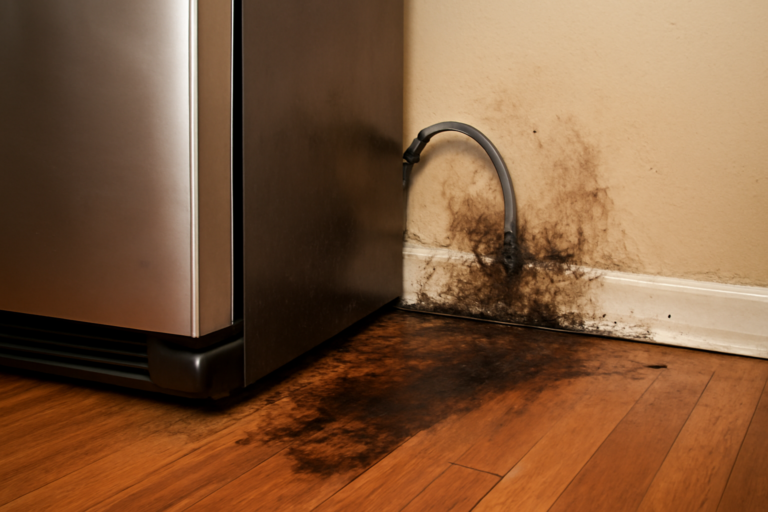
HVAC Leak Water Removal in Monticello, MN
Trusted by 155+ Homeowners
Don’t Let a Leaking HVAC System Wreck Your Home
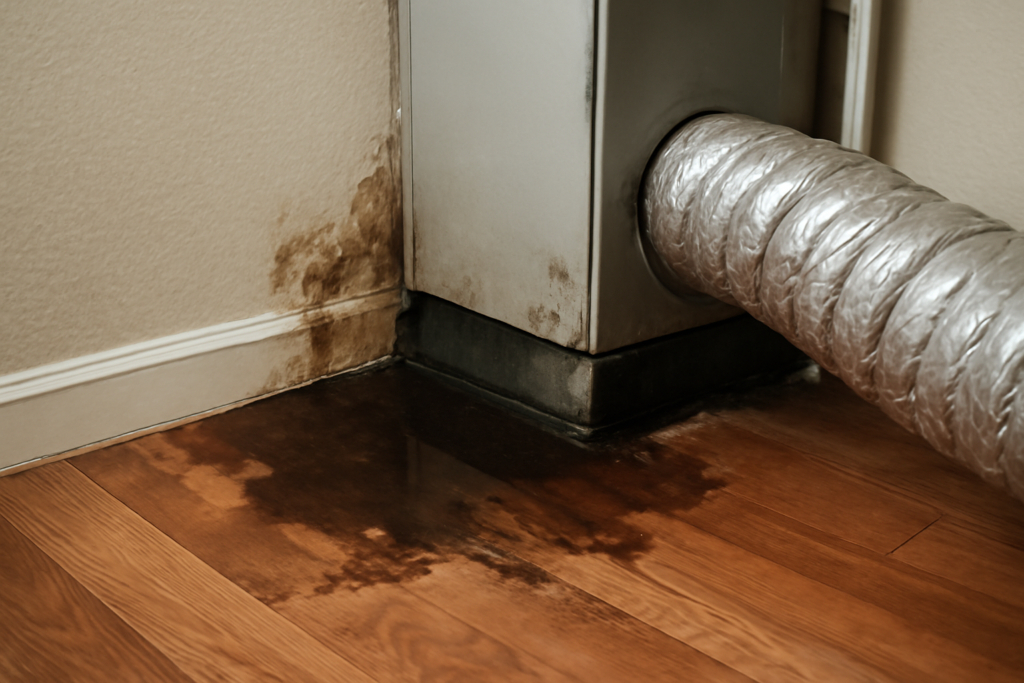
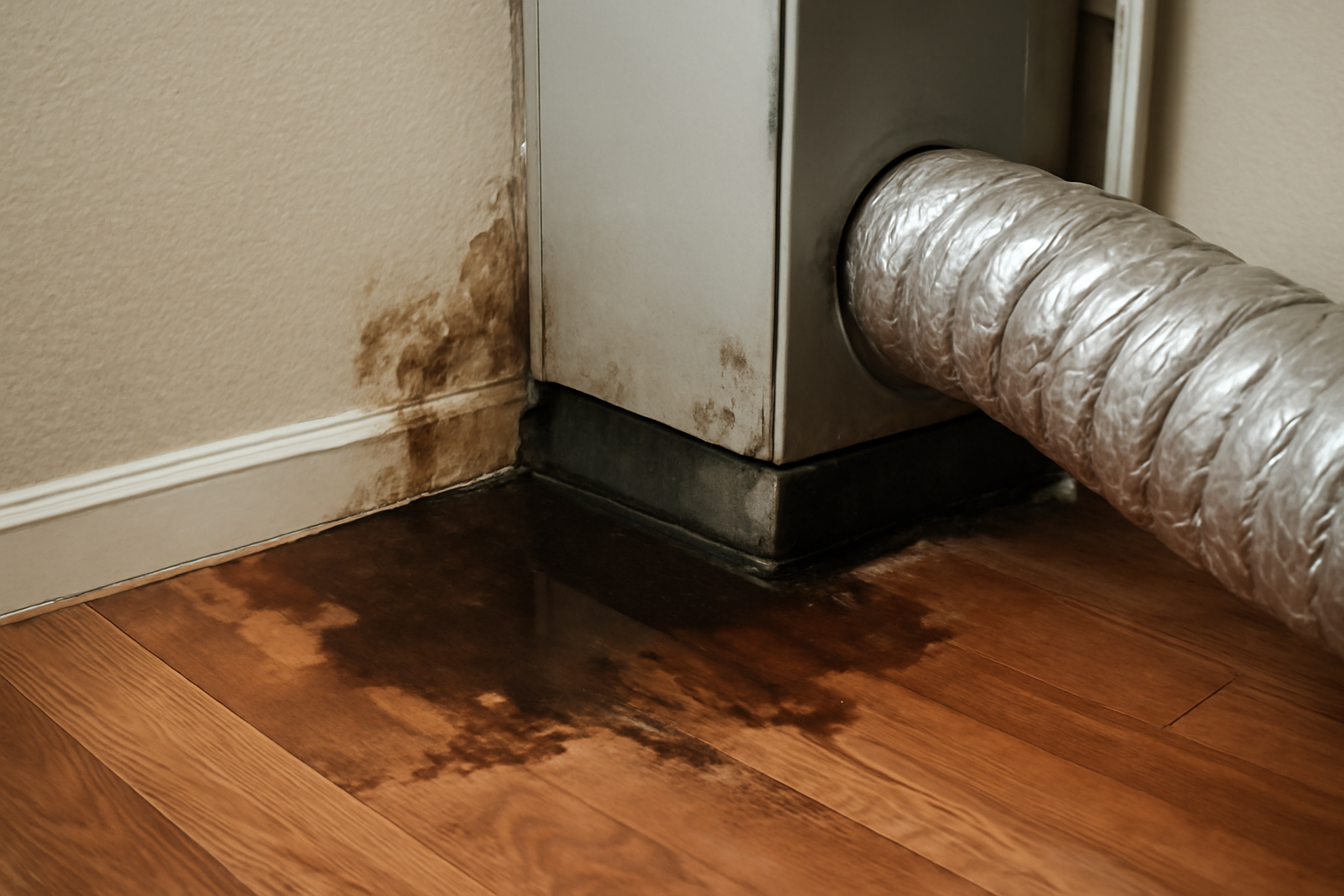
You’re home from work on a chilly autumn evening when you notice a faint sound of dripping water coming from the vents in your living room. As you investigate, you see a small puddle of water spreading across the hardwood floor, and a musty smell starts to fill the air. You quickly realize that your HVAC system is leaking, and it’s a bigger problem than you thought. The water is making its way into your walls, and you’re worried about the damage it could cause to your home’s structural integrity.
With over 165 five-star reviews from satisfied customers in the area, you can trust our team to handle your HVAC leak water removal needs quickly and efficiently. Our technicians are IICRC-certified and have the experience to get the job done right.
- We use advanced moisture detection equipment to identify the source of the leak and measure the moisture levels in your home’s walls and floors.
- We use specialized drying equipment to remove excess moisture and prevent further damage.
- We work with you to create a customized drying plan that meets your unique needs and schedule.
The Science Behind Our HVAC Leak Water Removal Process
Our team’s process for removing water from HVAC leaks is a carefully orchestrated dance of technology and expertise. We use specialized equipment to detect and measure the moisture levels in your home, and then we create a customized drying plan that takes into account the specific needs of your situation. Our technicians are trained to work efficiently and effectively, using the latest techniques and tools to get the job done right.
Step 1: Moisture Detection
We use advanced moisture detection equipment to identify the source of the leak and measure the moisture levels in your home’s walls and floors. This allows us to create a detailed map of the affected areas and develop a plan to address the issue.
Step 2: Containment
We use specialized equipment to contain the affected areas and prevent further damage. This may include setting up tarps or plastic sheets to block off affected areas and prevent water from spreading.
Step 3: Drying Equipment Deployment
We deploy specialized drying equipment to remove excess moisture from the affected areas. This may include high-velocity air movers, dehumidifiers, and other equipment designed to speed up the drying process.
Step 4: Monitoring and Adjustments
We regularly monitor the moisture levels and adjust our drying plan as needed to ensure the best possible results. This may involve adjusting the placement of drying equipment or making changes to the drying schedule.
Step 5: Final Inspection and Clean-up
Once the drying process is complete, we conduct a final inspection to ensure that all affected areas are dry and free of moisture. We also clean up any equipment or debris left behind during the process.
Don’t wait until the problem gets worse! Call us today to schedule an appointment and get your home back to normal.
Warning Signs You Need HVAC Leak Water Removal
Catching the signs of an HVAC leak early can save you a lot of money and prevent bigger problems down the line. Here are some common warning signs to look out for:
Musty Odors That Won’t Go Away
If you notice a persistent musty smell in your home, it could be a sign that your HVAC system is leaking. This type of odor is often caused by mold and mildew growth, which can be a serious health risk.
Water Stains on Your Ceiling or Walls
If you notice water stains on your ceiling or walls, it’s a clear sign that you have a leak somewhere in your home. This type of damage can be expensive to repair, so it’s essential to address the issue quickly.
Unexplained Puddles of Water
Even if you can’t see any visible signs of a leak, unexplained puddles of water can be a sign that something is amiss. This could be a sign that your HVAC system is leaking, or it could be a sign of a more serious issue.
Increased Energy Bills
If your energy bills are suddenly increasing, it could be a sign that your HVAC system is working harder than usual to keep your home cool or warm. This could be a sign that your system is leaking and needs to be repaired.
Reduced Airflow
If you notice that the airflow from your vents is reduced, it could be a sign that your HVAC system is clogged with debris or water. This type of issue can be serious and may need professional attention.
Unusual Sounds or Noises
If you notice unusual sounds or noises coming from your vents, it could be a sign that your HVAC system is leaking or clogged. This type of issue can be serious and may need professional attention.
HVAC Leak Water Removal vs. DIY: When To Call a Professional
| Situation | DIY? | Call a Pro? | Why |
|---|---|---|---|
| Small leak with minimal damage | Yes | No | You can likely fix the issue yourself with some basic tools and materials. |
| Large leak with significant damage | No | Yes | The damage is too extensive, and you’ll need professional help to repair it. |
| Leaks in hard-to-reach areas | No | Yes | You’ll need specialized equipment to access and repair the leak. |
| Leaks in areas with sensitive equipment | No | Yes | You’ll need professional help to repair the leak without damaging the surrounding equipment. |
| Leaks in areas with high humidity | No | Yes | You’ll need professional help to dry out the area and prevent further damage. |
| Leaks in areas with potential health risks | No | Yes | You’ll need professional help to contain and clean up the area to prevent health risks. |
While some small leaks may be fixable on your own, larger leaks or those in hard-to-reach areas need professional attention. Our team has the training and equipment to handle even the toughest leaks and get your home back to normal.
HVAC Leak Water Removal Cost In Monticello, MN
The cost of HVAC leak water removal can vary depending on the severity and size of the affected area. In Monticello, MN, the typical price range for this service is $500 – $2,500. The cost will depend on factors such as the size of the affected area, the severity of the leak, and the amount of equipment needed to dry out the area.
| Service | Typical Price Range | What Affects Cost |
|---|---|---|
| Moisture Detection | $200 – $500 | Size of the affected area and severity of the leak |
| Containment and Cleaning | $500 – $1,500 | Size of the affected area and type of equipment needed |
| Drying Equipment Rental | $100 – $500 | Size of the affected area and type of equipment needed |
| Final Inspection and Clean-up | $200 – $500 | Size of the affected area and type of equipment needed |
| More Equipment or Services | $500 – $2,000 | Size of the affected area and type of equipment needed |
Exact pricing will depend on an on-site assessment, and we offer free estimates to all our customers. Don’t wait until the problem gets worse! Call us today to schedule an appointment.
Service Areas Near Monticello, MN
Our team serves the following areas: Albertville, Anoka, Big Lake, Brooklyn Center, Brooklyn Park, Buffalo, Cambridge, Champlin, Chaska, Circle Pines, Coon Rapids, Dayton, Delano, Eden Prairie, Elk River, Forest Lake, Glencoe, Greenfield, Hamel, Hanover, Hastings, Hugo, Independence, Isanti, Loretto, Maple Grove, Maple Plain, Mayer, Medina, Mound, New Prague, New Trier, North Branch, North Oaks, Nowthen, Oak Grove, Osseo, Otsego, Princeton, Prior Lake, Ramsey, Rockford, Rogers, Saint Francis, Saint Michael, Saint Paul, South Haven, South St Paul, Spencer Brook, Spring Lake Park, Sunfish Lake, Tonka Bay, Victoria, Waconia, Watertown, Wayzata, West Lakeland, Woodbury, Wyoming, Zimmerman.
Common Questions About HVAC Leak Water Removal
Q: How long does it take to dry out a flooded home?
A: The drying time will depend on the size of the affected area and the severity of the flood. Our team will work with you to create a customized drying plan that meets your unique needs and schedule. On average, it can take anywhere from 3-5 days to dry out a flooded home.
Q: Can I use a wet/dry vacuum to clean up a flooded home?
A: While a wet/dry vacuum can be helpful in cleaning up a flooded home, it’s not always the best solution. Our team has the specialized equipment and training to safely and effectively clean up and dry out affected areas.
Q: Do I need to replace my entire HVAC system if it’s leaking?
A: Not necessarily. While a leaky HVAC system can be a serious issue, it’s not always a sign that the entire system needs to be replaced. Our team will work with you to identify the source of the leak and create a repair plan that meets your needs and budget.
Q: Can I use bleach to clean up a flooded home?
A: No. Bleach can actually make the situation worse by spreading the moisture and creating new health risks. Our team will use specialized cleaning equipment and products to safely and effectively clean up and dry out affected areas.
Q: How often should I inspect my HVAC system for leaks?
A: We recommend inspecting your HVAC system at least once a year, preferably before the start of the cooling or heating season. This will help you catch any potential issues before they become major problems.
Check Our Other Relevant Services
- High-Velocity Air Mover Drying in Monticello, MN
- Gray Water Extraction (Category 2) in Monticello, MN
Serving Monticello, MN And Nearby Areas